
Key Takeaways
• HyperSport: serious performance in a car that feels predictable, manageable and rewarding to drive.
• <700 kg track car with a power-to-weight ratio of 430 bhp/tonne.
• Optimised front and rear pushrod double-wishbone suspension systems with ride-height adjustment.
• Full suspension motion evaluated in RACE Software: heave, roll, steering, lateral, longitudinal and tyre aligning torque.
• Scrub radius and mechanical trail reduced relative to the 500 EVO, power steering not required on the HyperSport.
• Bump camber reduced, improving tyre vertical stiffness contribution under braking for better stability and feel.
• Baseline simulations accessible on the go in RACE Software for setup evaluation alongside track testing.
1. Introduction
Most high-performance cars are defined by their top speed and lap times. But the Revolution HyperSport, Revolution Race Cars’ new sub-700 kg track car with a power-to-weight ratio of 430 bhp per tonne, was designed with a clear philosophy in mind: to give drivers serious track performance without a car that feels intimidating or difficult to manage. Its suspension development was part of that philosophy, with Revolution Race Cars using RACE Software’s cloud-based K&C analysis platform to support the engineering work behind the car’s dynamic character.
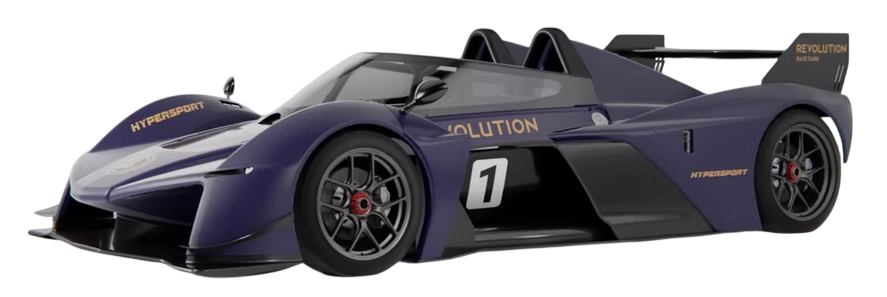
Revolution Race Cars – HyperSport
Revolution Race Cars set out to create a track car that drivers could enjoy, understand and push with confidence.
The HyperSport is aimed at customers who are not always professional racing drivers. That makes the brief more demanding, not less. The car still has to deliver serious performance, but it also has to feel predictable, usable and clear in the way it responds to driver inputs.
That thinking shaped the wider vehicle concept. The HyperSport was developed around enjoyment, ease of use and safety, with attention given to aerodynamic design, cockpit visibility, ergonomics, serviceability, structural stiffness, lightweight construction and predictable on-track behaviour.
The suspension development was central to that goal.
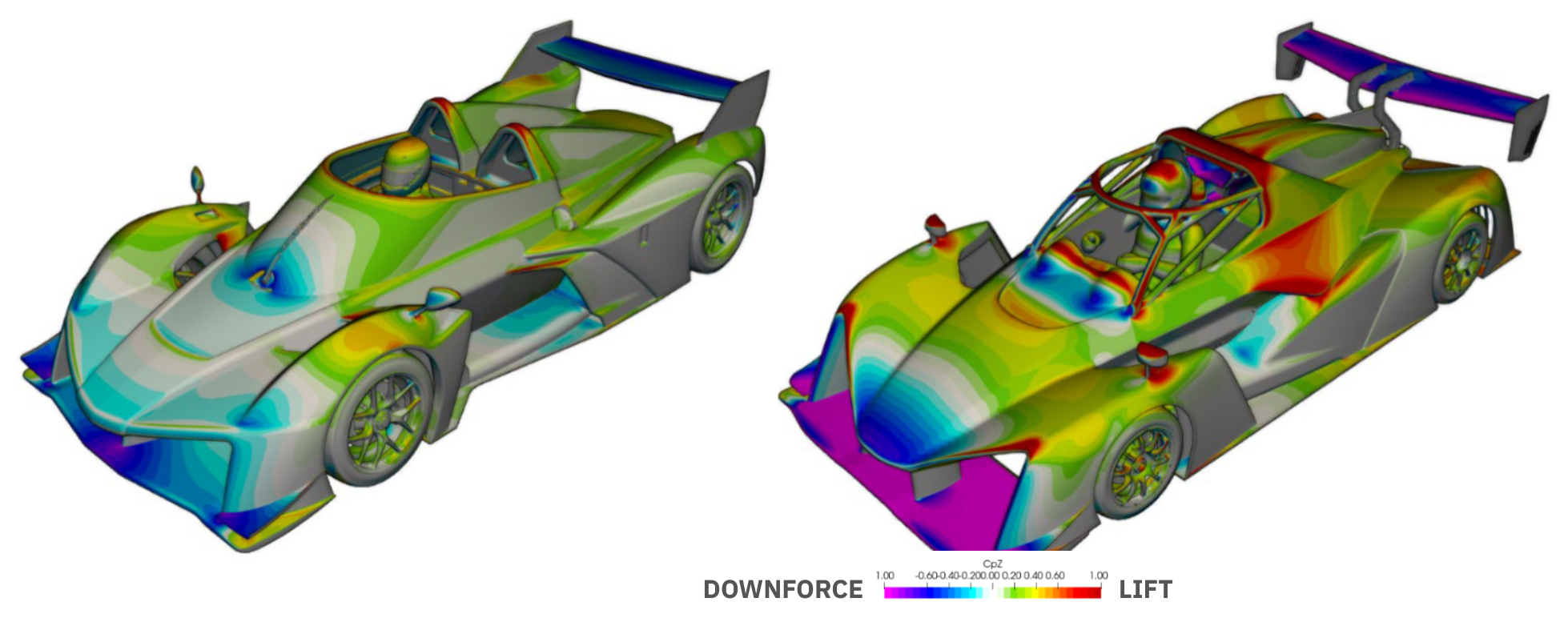 HyperSport (left) showing reduced body drag compared with the 500 EVO (right)
2. Suspension architecture with a purpose
The HyperSport suspension layout was not developed only around dynamic performance. It also had to support the wider design philosophy of the car: usable, lightweight, serviceable and efficient.
The car features front and rear pushrod double-wishbone suspension with ride-height adjustment.
At the front, the suspension is mounted to the front bulkhead of the carbon tub. This layout helps maximise cockpit space, removes the need for additional upper cover panels and uses the stiffness of the carbon structure to keep the supporting suspension structure lightweight.
The front suspension is also mounted in a single plane and positioned ahead of the front axle centreline. This keeps the structure naturally stiff, contributes to a lightweight layout and supports the car’s weight distribution.
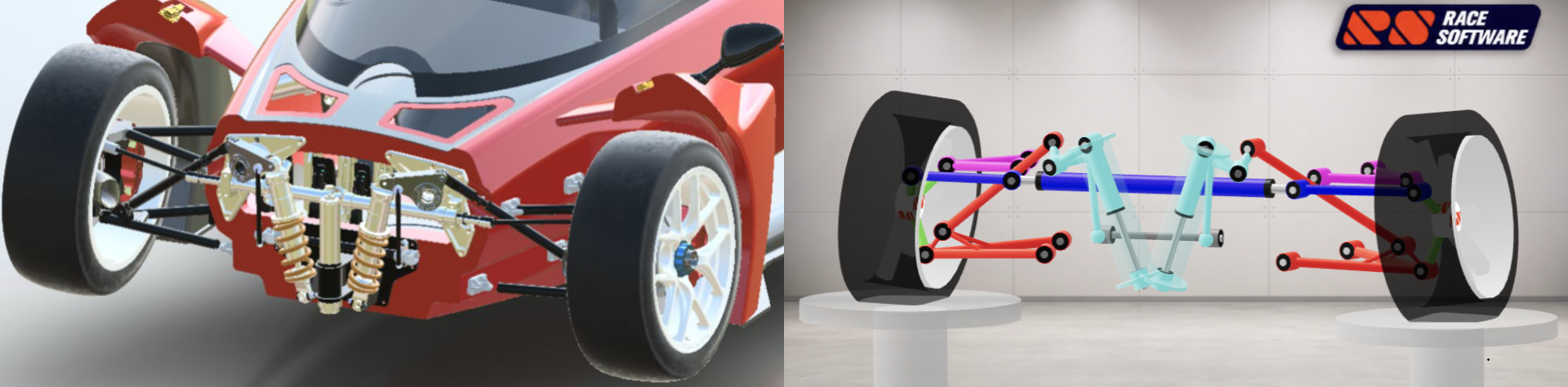 HyperSport Front Suspension – CAD (left) and RACE Software (right)
At the rear, the suspension follows a more conventional layout, mounted to the transaxle gearbox used in the Revolution 427 and 500SC models. Together, the front and rear layouts show how the HyperSport suspension package was developed as part of the complete car, not as an isolated system.
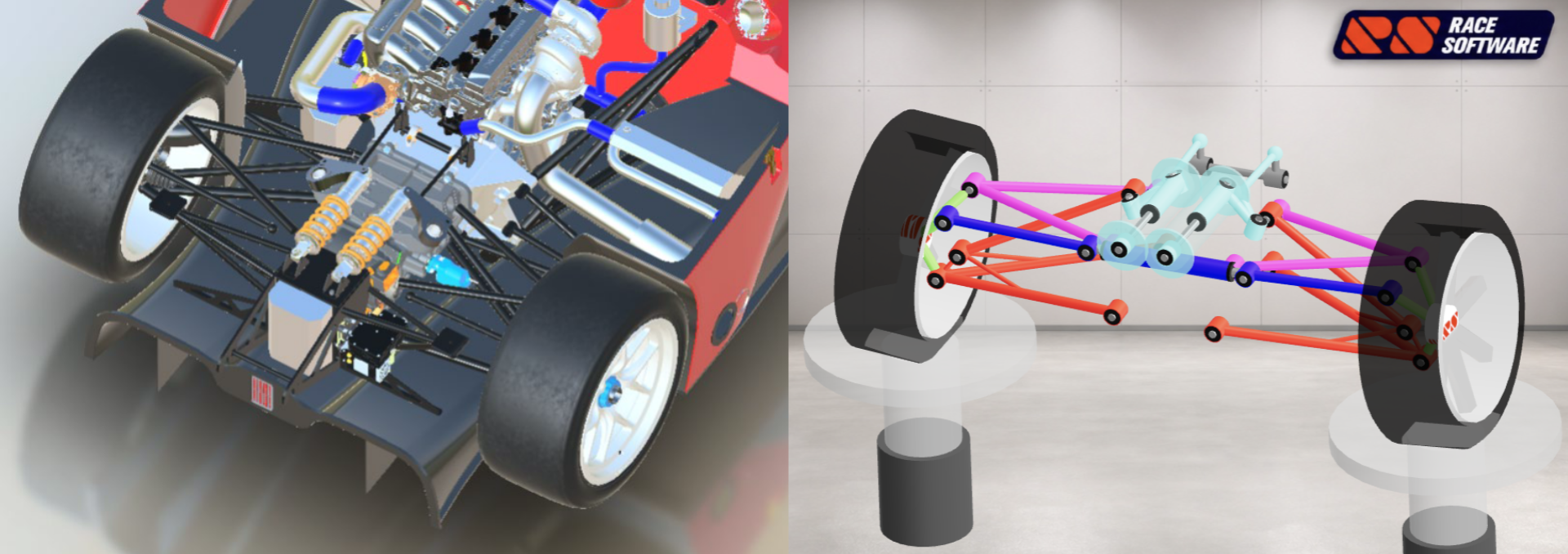 HyperSport Rear Suspension – CAD (left) and RACE Software (right)
3. Suspension development with a driver outcome
During the HyperSport development, Revolution used RACE Software for multibody simulations, evaluating the suspension though vertical and roll motions, steering inputs, lateral (cornering) forces, braking and traction forces and tyre aligning torque.
The video below shows the front suspension through bump/rebound, roll and steering simulations, illustrating its movement and behaviour across the defined test conditions.
The rear suspension is presented in the video below under bump/rebound and roll inputs, highlighting how the axle responds throughout the simulated travel.
The work supported specific vehicle dynamics targets. One focus was reducing scrub radius and mechanical trail compared with the 500 EVO, with the aim of reducing steering weight to the point where power steering would not be required. Another was reducing bump camber, meaning the front wheels add less negative camber as the suspension compresses under braking forces. This helps the tyre use more of its vertical stiffness under braking, supporting improved braking stability and feel.
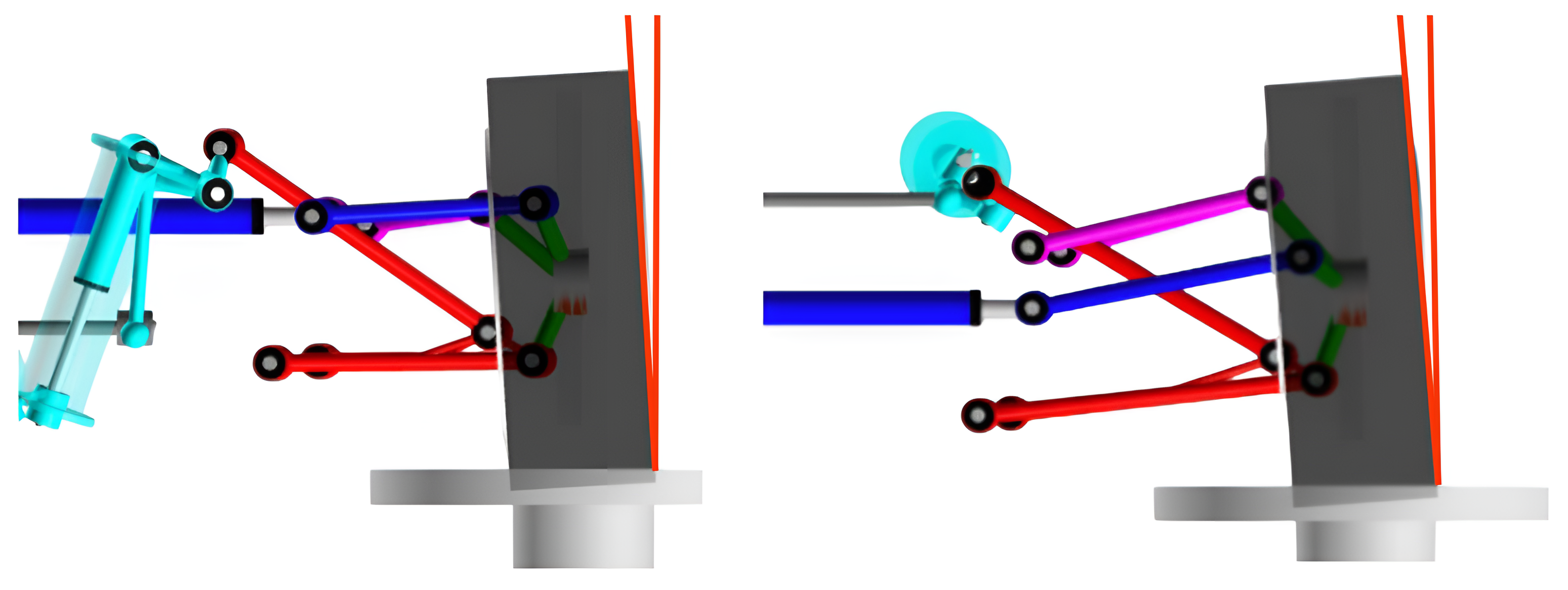
Front Suspension Camber Gain under Braking (RACE Software) – HyperSport (left) vs 500 EVO (right)
These are detailed suspension characteristics, but their value is felt directly by the driver. Steering effort influences how manageable the car feels, braking stability affects confidence on corner entry, and suspension behaviour through vertical movement, roll and steering input affects how clearly the car communicates on track.
That is where simulation adds value. It allows engineers to study suspension behaviour before finalising key geometry decisions, supporting the definition and refinement of the suspension layout while accounting for key joint stiffnesses, spring rates and anti-roll bar stiffnesses. This gives a clearer view of how those decisions influence suspension motion and vehicle response within the development process.
With the baseline suspension simulations already available in RACE Software’s cloud-based platform, Revolution can evaluate different suspension set-ups and parameter changes through simulation while running the car at the track. This gives the engineering team a practical way to compare options quickly and make better-informed decisions.
4. Part of the wider HyperSport philosophy
The HyperSport’s suspension was not developed in isolation. It had to support the same philosophy as the rest of the car: serious performance made easier to access.
A track car can be technically impressive and still be difficult to enjoy. Revolution’s approach with the HyperSport is different. The engineering is aimed at giving the driver the confidence to use the car’s performance, rather than feel intimidated by it.
This is why the suspension work matters. It is one of the areas where engineering detail becomes driver feel. Geometry, motion, stiffness, packaging and serviceability all contribute to whether the car feels usable and trustworthy over repeated laps.
RACE Software is a kinematics and compliance cloud-based analysis platform. For the HyperSport, it supported the simulation and analysis behind the suspension development, while the wider value of the platform is in helping engineers understand how suspension systems move, respond and contribute to the character of the car.
For Revolution, this formed part of the development process behind a car designed to be fast, predictable and rewarding to drive.
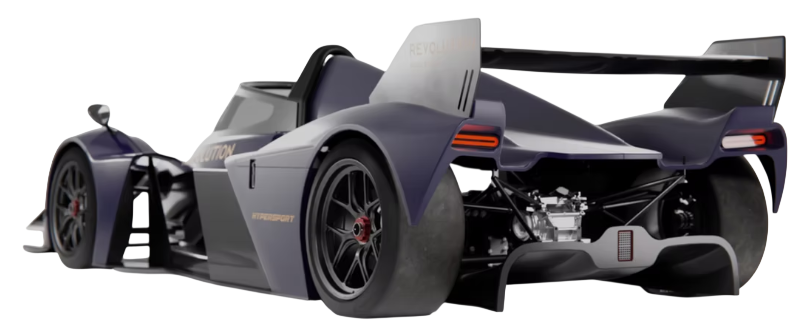
Revolution Race Cars – HyperSport
5. Designed to be driven
The Revolution HyperSport shows that modern track car development is not only about making a car faster.
A fast car also needs to be understandable. A lightweight car still needs to feel stable. A car designed for serious circuit use still needs to give the driver confidence lap after lap.
The HyperSport is not only designed to be fast.
It is designed to be driven.
Interested in using RACE Software for your suspension and chassis development?